

The Difference Between a Partial Knee Replacement and a Total Knee Replacement
Knee pain can make simple activities like standing, walking or climbing the stairs very uncomfortable especially for people with severe arthritis or severe joint damage. Knee replacement surgery can provide pain relief as a last resort and improve one’s mobility. But not all replacements are the same.
A few weeks ago, a family member had a partial knee replacement. Being the family physio, I was asked several questions:
- What exactly is a partial knee replacement?
- What happens to the other parts of the knee?
- How can a surgeon replace just one section of the knee joint?
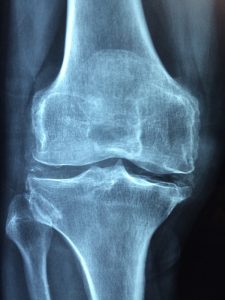
These are common questions, so let’s explore the differences between a partial and full knee replacement surgeries, including the benefits, potential drawbacks and recovery considerations for each procedure.
What Is a Partial Knee Replacement?
A partial knee replacement (also called unicompartmental knee replacement or UKR) is a surgical procedure that replaces only the damaged section of the knee joint. If arthritis affects just one area of the knee or compartment, a surgeon may wish to replace only the damaged area while preserving the remaining healthier parts of the joint.
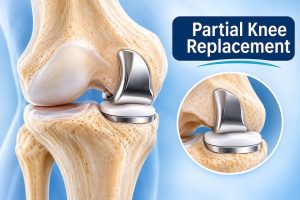
Benefits of Partial Knee Replacement
- Smaller incision
- Less tissue damage
- Shorter operation
- Faster recovery
- Less post-operative pain
- Shorter hospital stay
Potential Disadvantages
- Not suitable for everyone if damage is not confined to one compartment of the knee.
- Further risk of surgery in the future if arthritis develops in the remaining compartment.
- May not provide complete pain relief in some patients.
What Is a Full (Total) Knee Replacement?
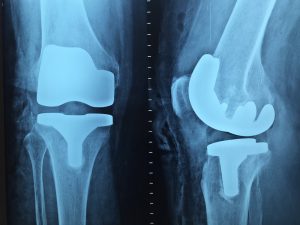
A full knee replacement (or total knee arthroplasty) involves replacing the entire knee joint with artificial components. This procedure is often recommended when arthritis or damage affects multiple compartments of the knee.
During surgery, damaged cartilage and bone are removed and replaced with cobalt-chrome and polyethylene (high-density plastic) implants designed to restore function and reduce pain.
Benefits of Full Knee Replacement
- Effective for advanced arthritis
- Significant pain reduction
- Improved mobility
- Improved joint stability and function
- Lower likelihood of needing revision surgery
Potential Drawbacks
- Longer period of recovery and rehabilitation required
- Larger incision and more invasive procedure
- Greater initial post-operative pain
Contact On The Go Physio today if you need further advice or are looking to start rehabilitation following your knee replacement.


